Time to Read:
Musings on the Universal Language
What is the universal language? Is there one?
I think so.
Is it love?
It definitely has a lot of the main ingredients. When love is present in its true and purest form, I do believe it touches us all. That checks “universal” off the list.
Perhaps love is actually the only thing that is really worthy of the efforts of language. Maybe it is even what every language is attempting to communicate, or, at the very least, facilitate.
Yes, the language of love deserves serious consideration for the title.
But, let’s be honest – as far as languages go, the grammar is a hot mess.
And the vocabulary from one person to the next can be all over the place.
As far as the purpose of language goes, which is to communicate, where love is concerned, it feels more like a miracle worthy of celebration when it is successfully spoken and understood. A language that only succeeds in communicating a percentage of the time is not very effective as a langauge.
As a thing worthy of communication, as something we hunger to share, I don’t know if there is anything more universal than love. If love itself were the universal language, however, we’d all be fluent in it, speaking it every day with the same ease that we might order a coffee or ask for directions. It is out there. We do speak it. It is everywhere. The language of love is working its magic a lot of the time. But, I think, if love were truly the universal language, the world would look a lot different than it does today.
So, if it is not love, what is it?
Is it mathematics?
I think any scientist could make a pretty solid case that math is the true universal language.
It is, after all, the actual language of the physical universe.
Any alien world that might exist out there is using the same math that we are (and probably more of it!). Our mathematical languages would have the same laws and operate according to the same formulas. Maybe we would have created different alphabets, but whatever alphabets we created would be used to describe the exact same grammar. We might have different vocabulary, but it would be to describe the same meaning. So far, that is sounding an awful lot like a universal language.
However, the most un-universal thing about the language of mathematics is how un-universally it is spoken and understood by all of beings IN the universe (at least the one that has people in it)!
Anyone that has suffered in silence through high-school pre-calc or doodled their way through a trigonometry class can easily attest to the fact that mathematics is a language that welcomes only the select few that have both the taste and the stomach for it.
You did not need to be a language lover to learn the native language you speak.
You did not need to be interested in it, you did not need to have a gift for it, you just learned it.
A successful language is inherently accessible to all participants in the group that uses it, regardless of their interest in it or capacity for it. Despite it’s inherent beauty, most of us humans are alienated by the language of math – not included into it.
If math were the universal language, I think we would all be speaking in numbers every day.
If you, in fact, do the math, you will see, as an active, living language, there is nothing universal about it.
So, what remains?
I would like to wholeheartedly cast my vote behind a language that sits in the place where math and love not only intersect, but intertwine. Yes, such a place exists. There is a language that is, at its core, entirely mathematical, but at its heart, is vehicle for pure love. It is a language that turns math into something pulsating, something alive, something that, when it reaches us, feels a whole lot more like love. It is a kind of math that does not alienate the heart, but brings it to life. It is a math that clears up the messy grammar of love and opens doors to closed hearts, breaks down barriers between people and brings strangers together in an instant across unfathomable distances of space and time.
And, it is a language that communicates love in its purest form and in all of it’s kinds – romantic love, familial love and the love for life itself.. I think, in fact, it is one of the most successful languages for consistently communicating love to masses of people and one of the only languages that is instantly understood regardless of interest, capacity, age, race, religion or creed. It is a language that, when spoken eloquently, communicates meaning instantly and without need for explanation in any other language.
And, it is a language that has a coherent and consistent grammar. A clear and easy to understand vocabulary. It is a language that can be taught for the development of mastery, but can be innately absorbed and intuited, to some degree, regardless of study.
I would like to wholeheartedly cast my vote and make my case that the universal language is, indeed, music.
The Universal Language in Action
Music is a language that surpasses the need for any other language to supplement it.
I saw this in the flesh in Spain when my homestay host told me about her favorite band, a little group from Liverpool that made a splash back in the 60s. She did her best to wrap her mouth around the foreign-to-her English words she’d loved for over 50 years with a loose pronunciation that hinted at the fact that she didn’t understand the words themselves. She recounted those tunes with a simple and sweet look of passion and joy that said she didn’t need to.
I could tell that she feels the same thing I feel when I hear “Let it Be” and she doesn’t speak a word of English.
One of the highlights of my trip was singing Beatles songs together for a minute or two while I translated and told her the linguistic meaning of her favorite songs – an act that was fun, but, largely insignificant. She didn’t need a translation. Those songs had already been speaking directly to her for decades.
Then, across the miles, many countries, languages and worlds later, I found myself hearing those same sounds here in Vienna, and seeing that same look when my composition teacher, fluent only in German and Russian, was waxing poetic about what makes a powerful song intro, dancing his fingers with affection and familiarity over the piano keys, making those same Beatles tunes with that same passionate look on his face that I saw in my Spanish host’s eyes – a look of love successfully elicited, effectively communicated. English, Spanish, Russian, German – each worlds apart – until the language of music effortlessly bridges the gap.
Just like any language, to become a linguistic expert in it, study is required. To become literate in it, one must learn the alphabet and how to read and write. But the heart and the soul of it, the ability to communicate with it, the ability to say something with it, the ability to hear what is being said with it – no training needed.
You don’t need to be a musician to know what a song is saying when you hear it.
You don’t need to be a singer to sing your heart out in the shower.
You don’t need to be a skilled guitarist to rock out on the air guitar.
You don’t need to be a trained musician to share a tune around the campfire or raise pints in the local pub joining in effusive song with your compadres.
Like any language, those that make it their life’s work to learn how to use it and use it well, can elevate the language to its highest potential, but, at the very least, every man, woman and child knows what music means when they hear it.
A language that is universally accessible, malleable enough to be a vehicle for unique and personal expression, structured well enough to be able to be written and read with consistency across space and time and consistently able to communicate heart and soul and meaning –
– yes, I wholeheartedly believe that music is, in fact, the universal language.
A Trip to Vienna, the City “Drunk with Music”
For me, this trip is all about being a student of language. It is not just about studying one language, but also about studying the universality of language itself. The more languages I learn, the more I feel able to peer deep into what is universal between all of us humans. It is no accident that at the center of my journey around the world, I have landed myself in a world capital of music.
The very first language course I signed up for when planning this trip was my month of studying German in Vienna. I found a program that combined the study of German with the study of music. There is no part of my trip that I have been more excited for (and I’ve been pretty excited about all of it), than the opportunity to study the universal language of music with the study of a linguistic language.
And where better to experience such a fusion than Vienna, the global and historic home of classical music? It is a city that has been both home and muse to countless musical names – Mozart, Beethoven, Haydn, Brahms, Strauss, Mahler and more.
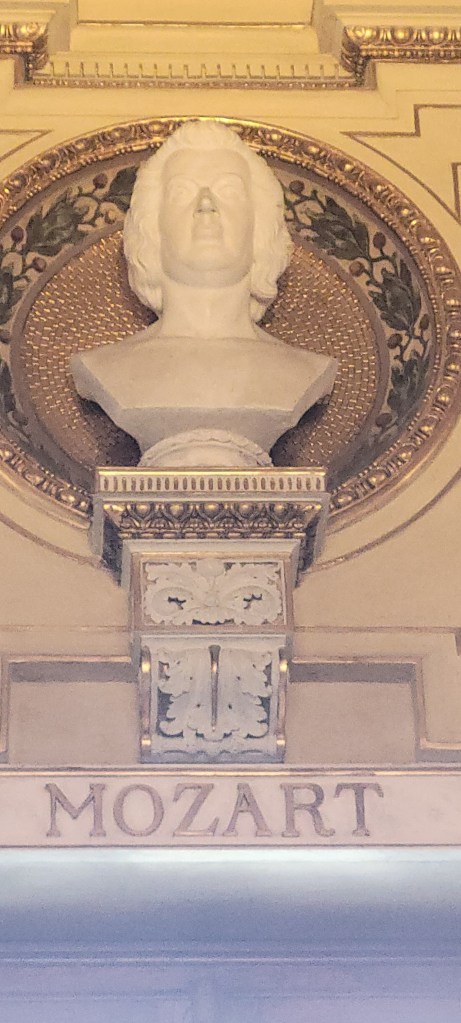
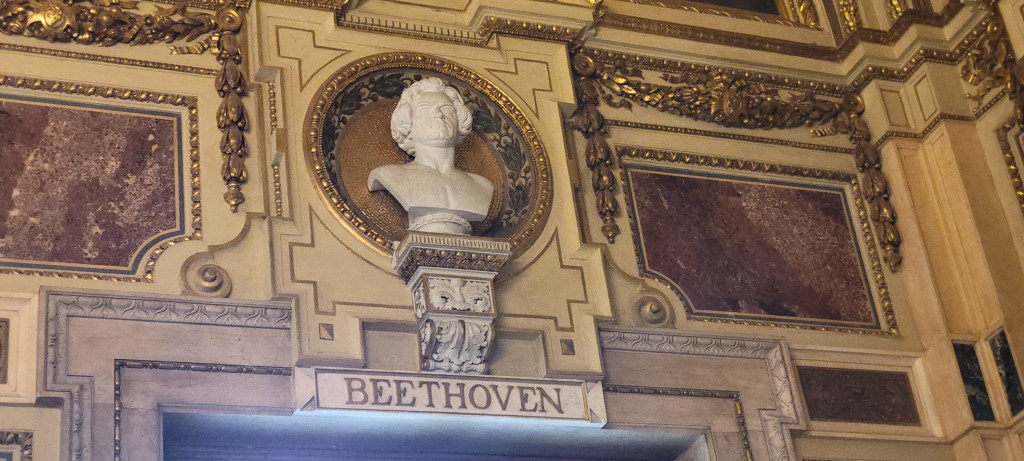
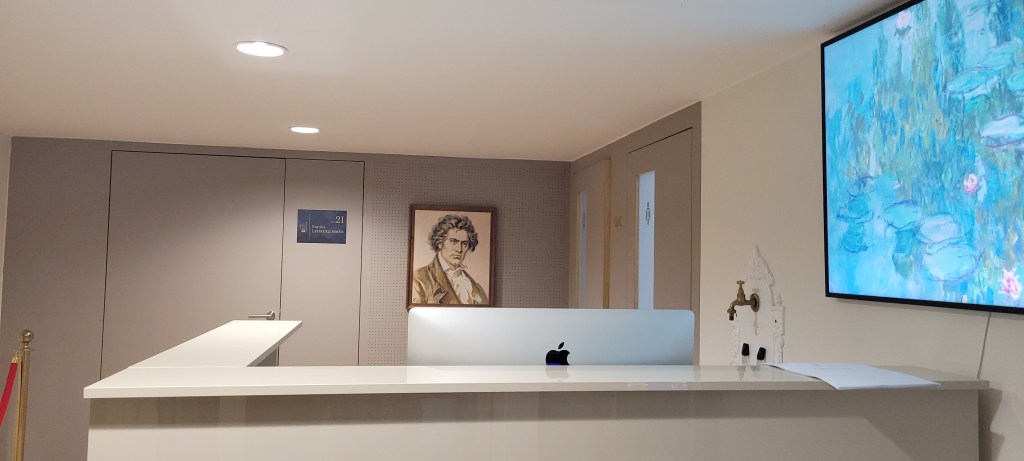
I would be taking my music lessons at the Vienna Beethoven Conservatory, a school named in honor of one of the greatest composers – a man that described Vienna as a city “drunk with music”.
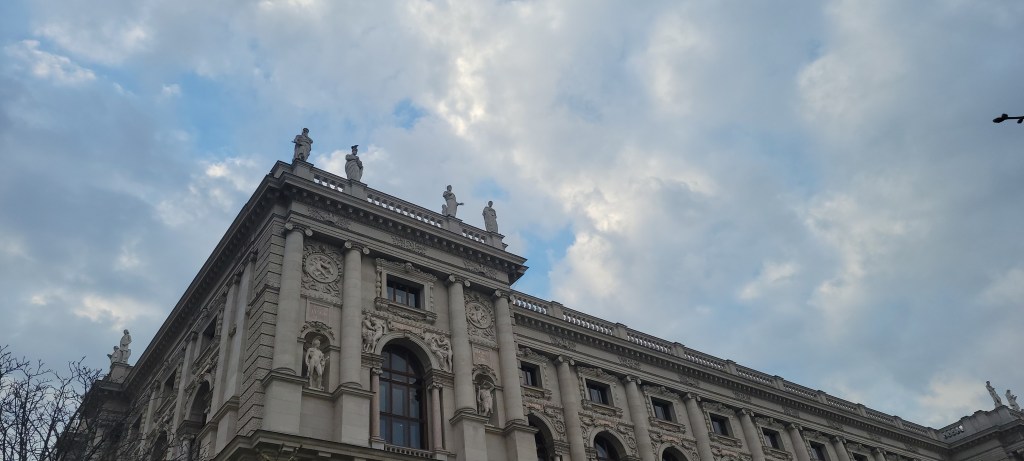
When I first arrived in Vienna, while the architecture struck me, I didn’t, at first, see the music in it. I knew it was is there inside of every building to be discovered with countless singers, instrumentalists, orchestras, composers and musicians around every corner. But, the physical city itself, although I loved it right away, when I first saw it, I wouldn’t have guessed it to be a city intoxicated by lyrical sound. To me, the buildings, at first, almost seemed like massive ornate lego creations – every building a unique stack of blocks layered upon each other with imposing stature. It was striking, but also formidable – not the way I think of music. Each block is made out of incredible statues and ornamentations, but still, they were stacked with a certain repetitiveness that didn’t, at first, ring like music to me.
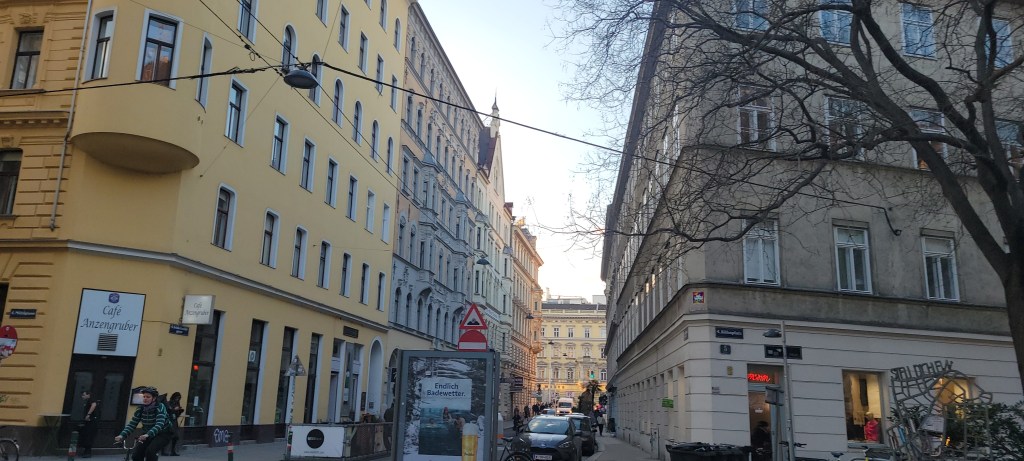
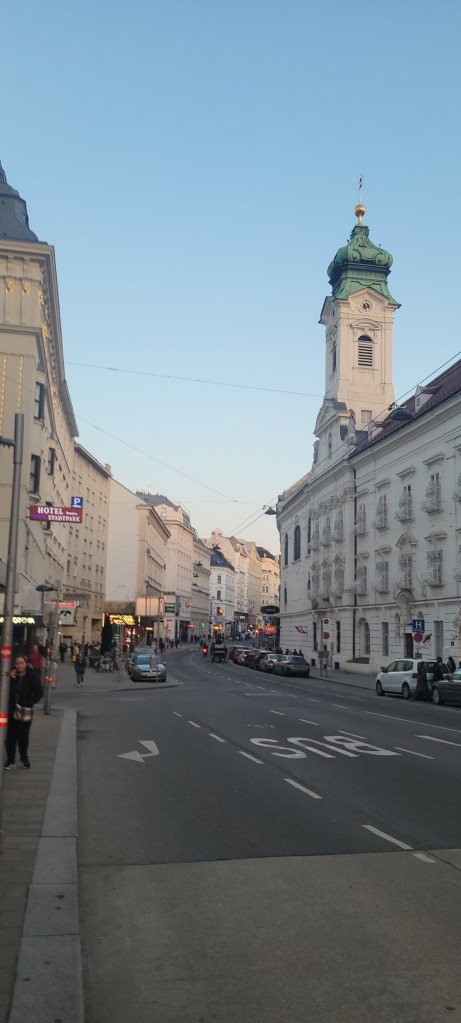
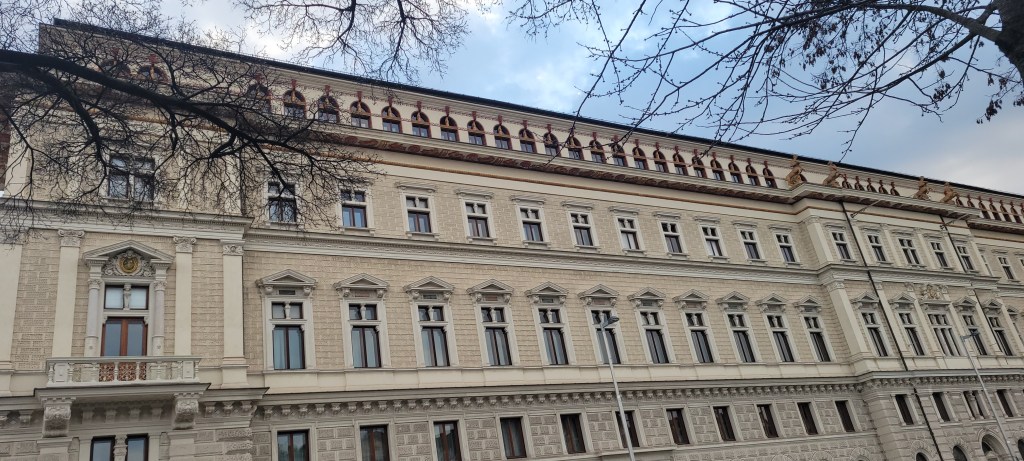
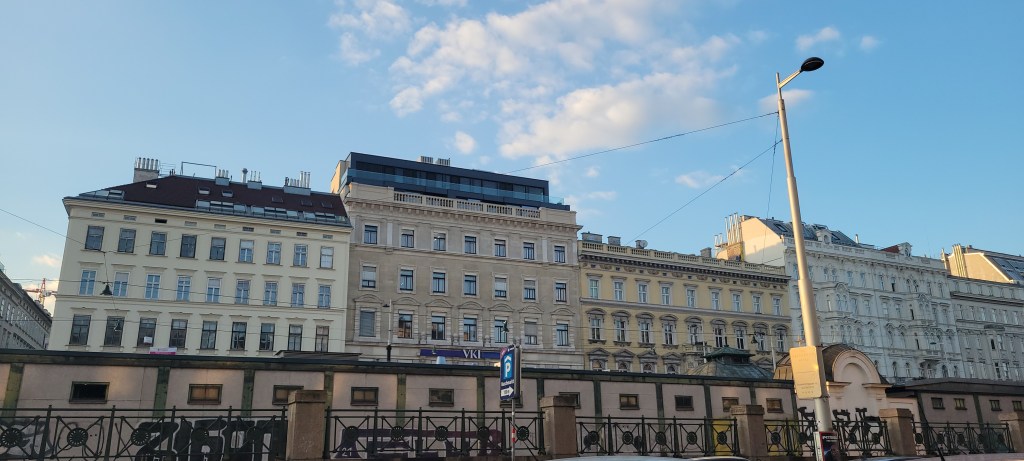
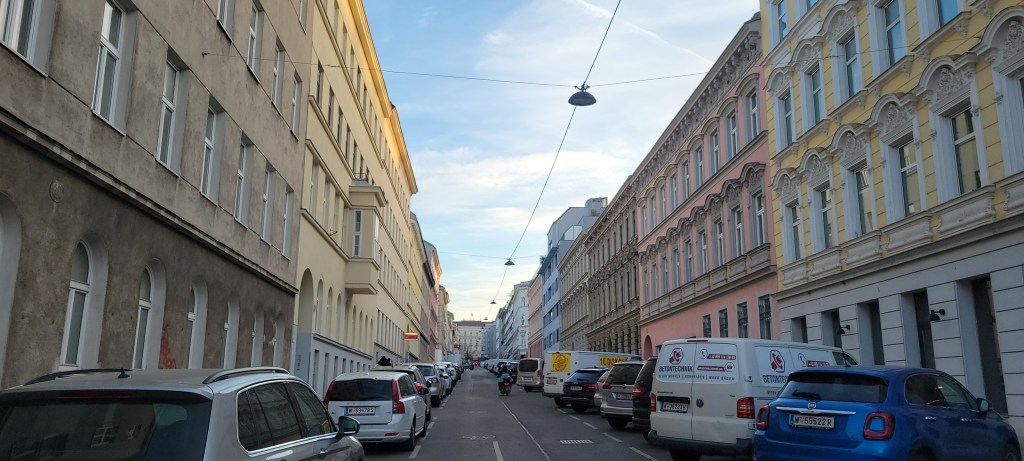
From the second I got to Vienna, even though I intellectually recognized the massive ornate buildings around me as beautiful, the look of them didn’t immediately match the kind of beauty that typically stirs me. But still, I felt something. I felt a certain kind of peacefulness that I knew was coming from this place and from the way it was built. No, I didn’t fully see it at first, but I felt it. I was in awe of the architecture right away. I was uplifted by the grandiosity of it all instantly. But the music of it took me a little bit of time to see.
As the days passed by, and the music of Vienna seeped deeper and deeper into my bones, I eventually, not only saw it, but began to recognize it all around me. I began to realize that it is not just somewhere, it is everywhere and it is everything. I began to understand the peaceful feeling I had experienced instantaneously. After a week or two, my view wasn’t filled with just beautiful, ornate, imposing blocks. It all came into focus and suddenly, I saw something very different.
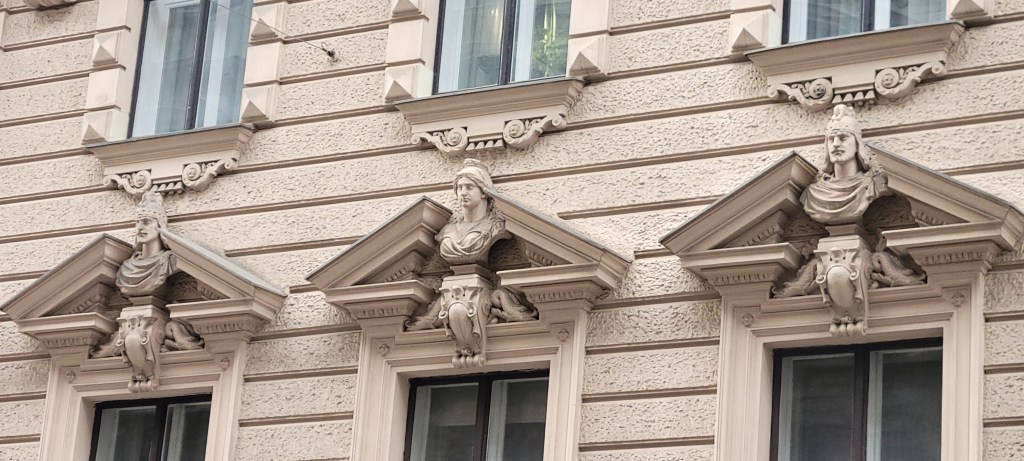
I started to see the streets lined, not with imposing ornate blocks, but with three dimensional sheets of music, each building a set of staves. Music is this magical place where the chaos of being alive squeezes into a liberating structure. And, now, I see it everywhere. I see the life in Vienna bursting, but inside these beautiful structures built to hold it. I find myself walking the streets imagining heads staring out of windows in different floors of this massive three dimensional city of sheet music to indicate what notes are to be played. What an incredible concert it would be if some orchestra were to play the musical notes of the lives being lived inside of each window in these grand staffs.
Yes, I see it now.
Vienna is a city built out of music.
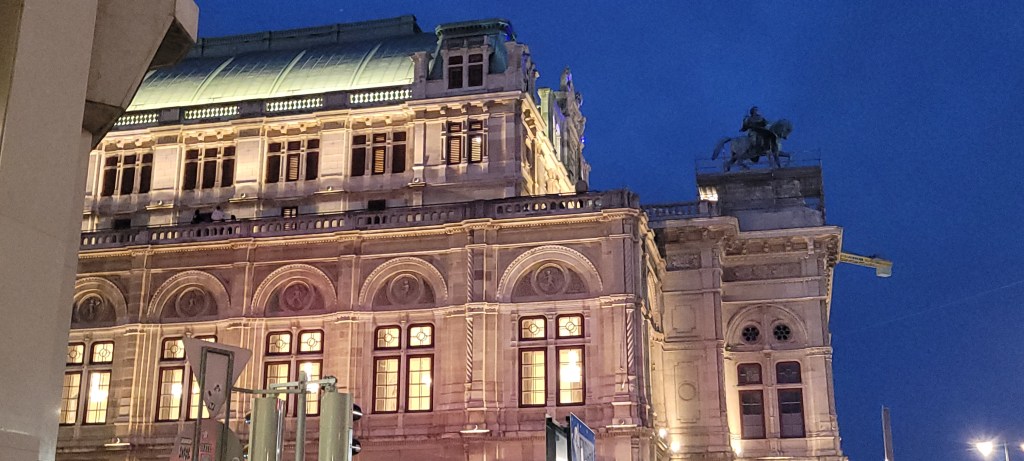
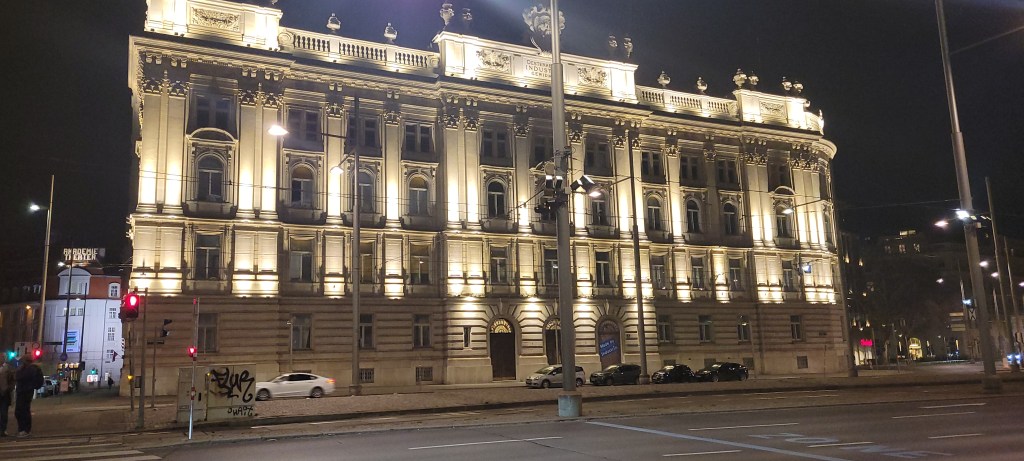
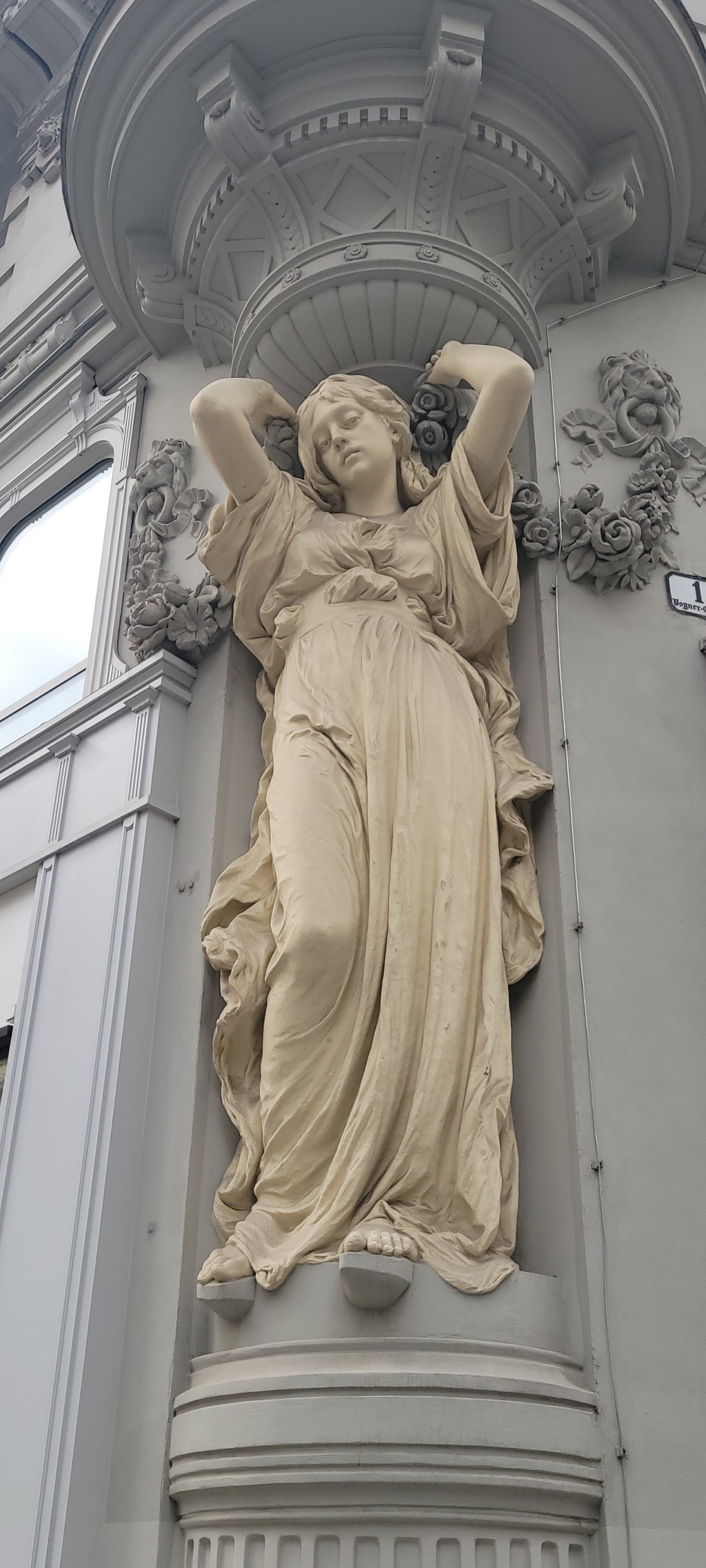
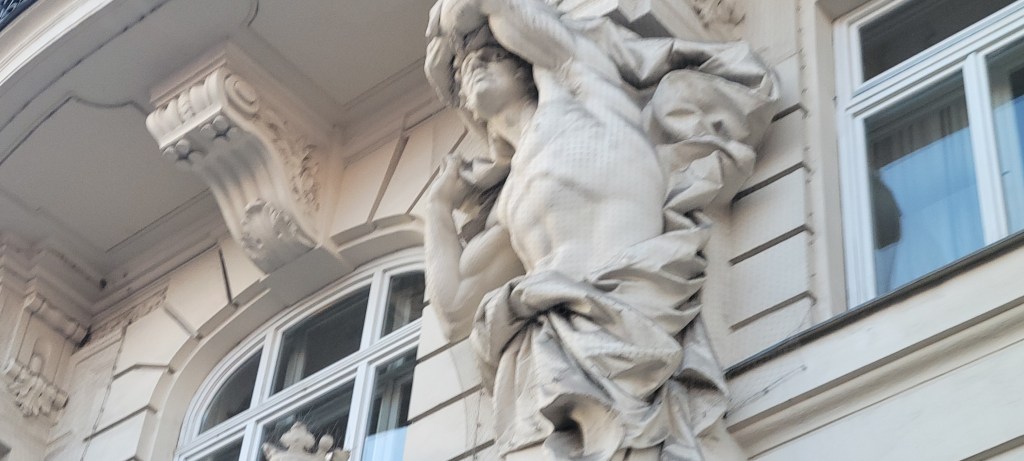
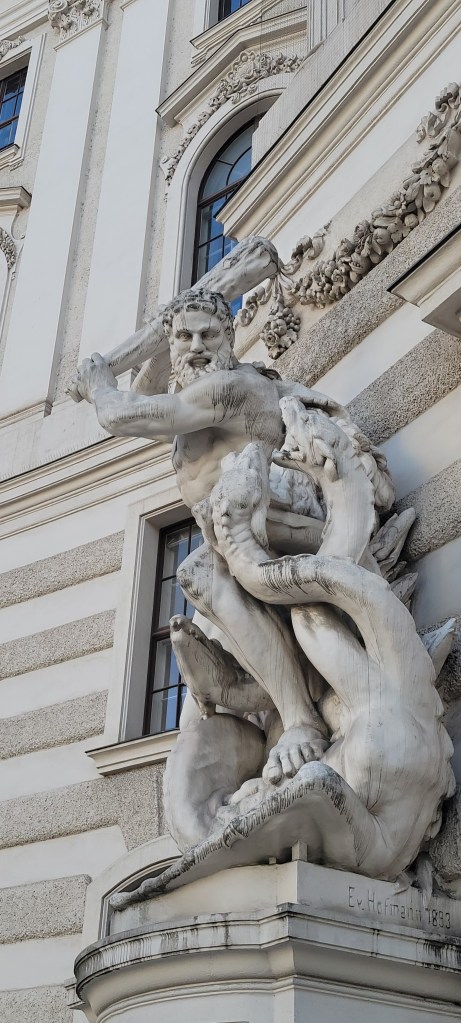
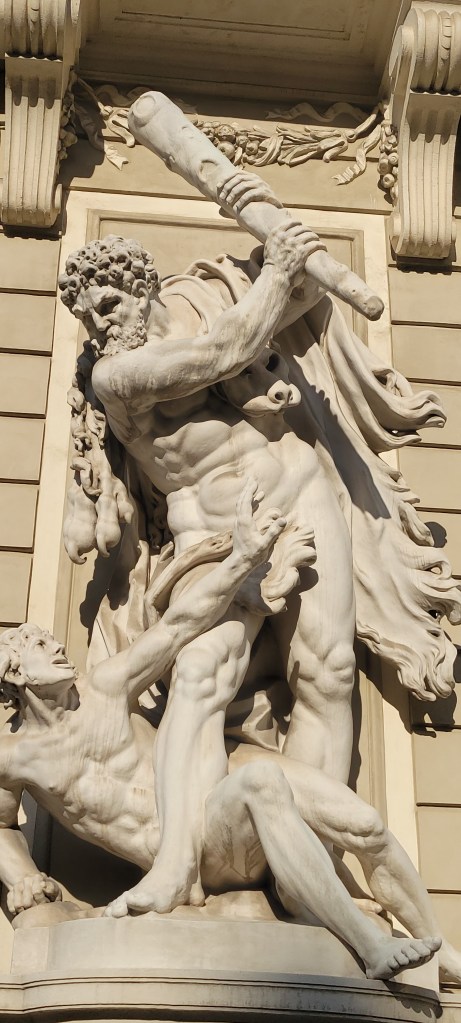
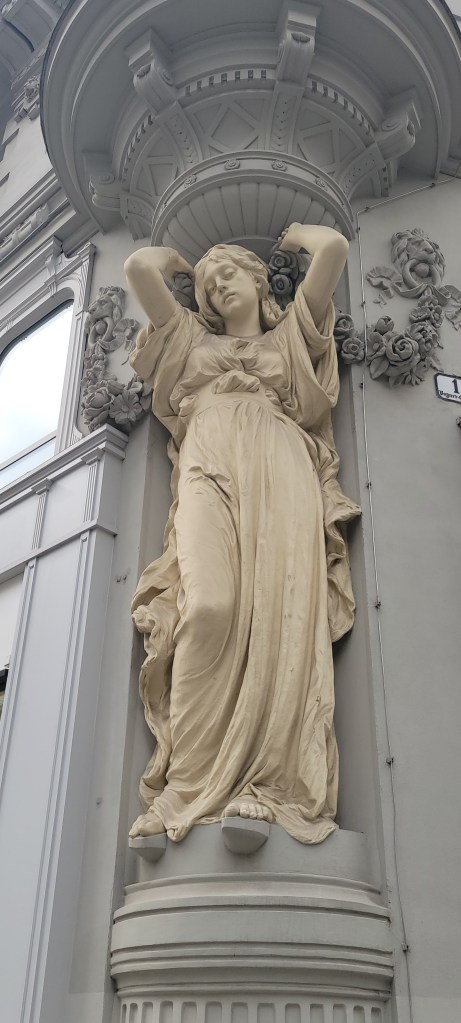
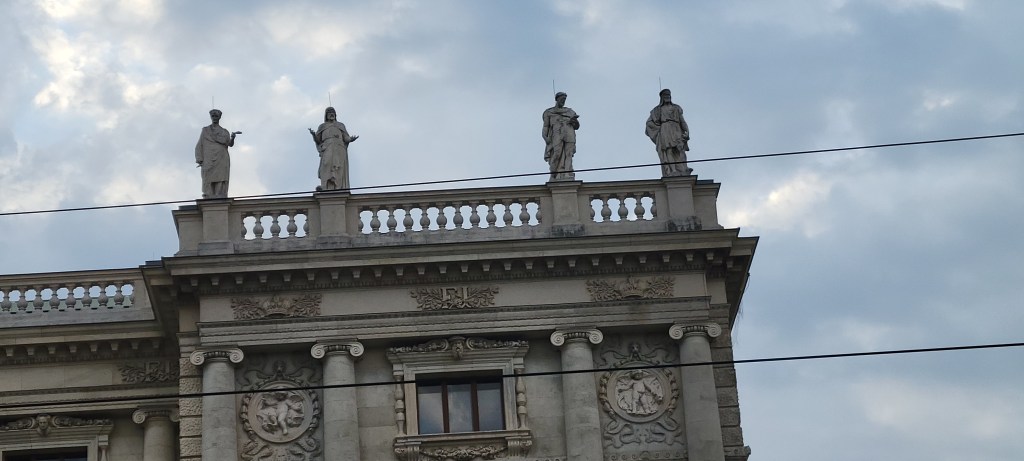
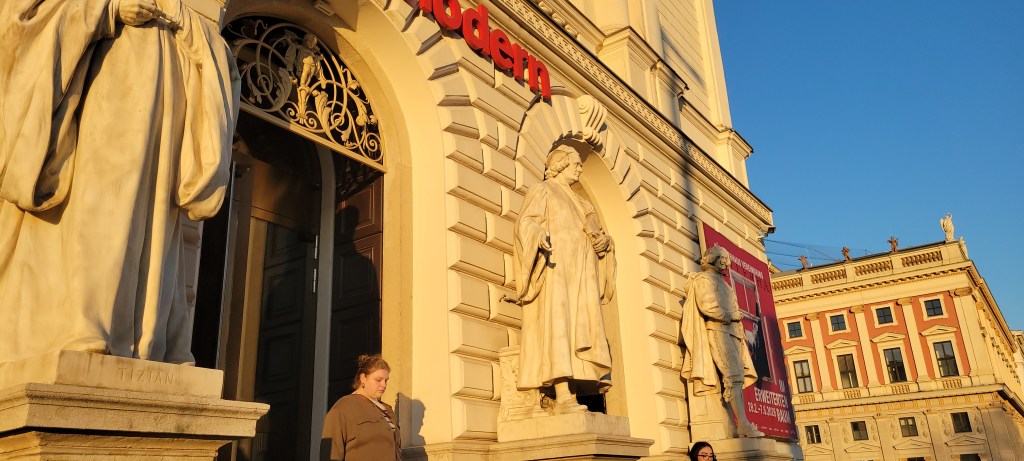
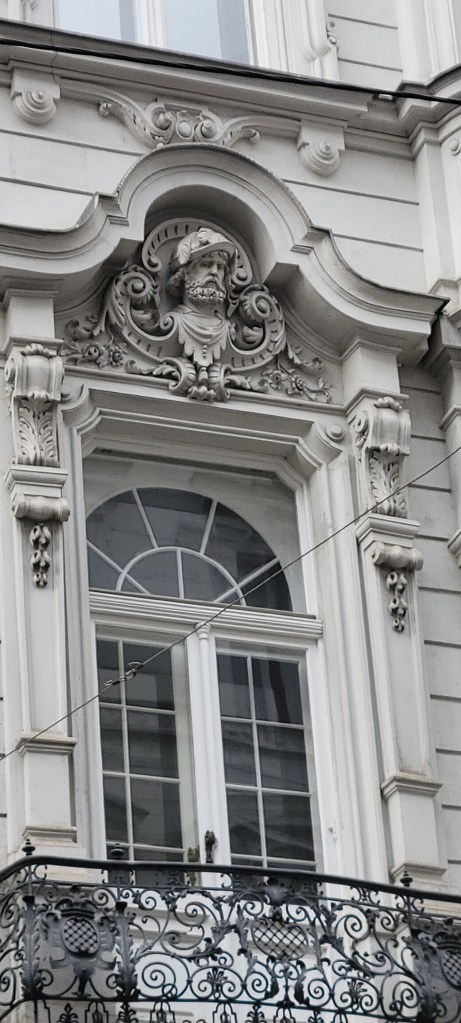
And there are statues everywhere. Full bodied or floating faces on nearly every building. Depending on your mood on any particular day, as you walk down the streets, you might feel like you are being watched or watched over. Or perhaps it is a permanent audience, woven right into all of the architecture, for the music that is constantly alive and coming to life here in this place.
Musical Bliss
Now that I understand music as a language, the musical experiences I’ve had here in Vienna make more sense to me, but that makes them no less remarkable in the feelings they have produced.
In the last 4 weeks, I have had some of the most wonderful musical moments of my life. Yes, I have seen many musical virtuosos bring the sounds of classical genius to life – and it has been beautiful and amazing. But, the transcendant musical moments for me have been much more personal.
I would wager a bet that anyone reading this has at least one, or maybe thousands of moments, where they have felt something profoundly personal, profoundly meaningful in a moment of music. In that moment, whatever it was or is, whether it is dancing late into the night to the sounds of a live band that seems to be echoing the feelings in your own soul, feeling your spirit explode as you sing your heart out to your favorite tune in the car on the way to work, or the feeling of strumming a guitar or tickling the ivories yourself to the tune of your favorite musician or to the sound of a melody that came out of your own inspiration, I am guessing you felt something that is so deeply you, that there is hardly any other way to imagine expressing it without the help of music. The parts of ourselves that music speaks to and has the ability to communicate are often difficult to touch in any other way.
And that is why my mind and heart practically exploded when my music teacher played my own music back to me – and in better form than I have ever come close to producing myself.
Before music becomes notes – it is just a feeling. And, those feelings can be so deep, so personal, and so abstract. Only after some effort, do they become notes. And here I was, in Vienna, Austria, hearing those personal feelings of mine, those feelings that eventually became notes, be played back to me. I was floored.
In the most logical sense, there is nothing remarkable about such a moment.
But it absolutely blew my mind.
Music is a language and it has a written form. Just like any language, if you know how to write the written form, you can take the invisible music that is inside of you to communicate, write it down, hand the piece of paper over to a complete stranger that is also musically literate, and the music that was once inside of you can come out of them! It is completely logical and functions exactly the same way that any language works. You may have never met Charles Dickens, Shakespeare or Agatha Christie – but you can still make their words come out of your mouth. It’s simple. But that doesn’t mean it is not amazing.
And itt is the same thing that amazes me about language itself, about each one of the languages that I am having a blast learning in each new country. Somehow, you put these structured sounds together in words and sentences and these invisible, abstract thoughts in one person’s head take shape and travel across a distance of any amount of miles INTO the head of another person where they turn back into something abstract and untouchable. I find this utterly incredible.
And if words were enough to gobsmack me with their capacity to perform this magic trick, then music is enough to – I don’t know – there are no words for that one!
How does music do it?
How is it possible that all of these feelings I have felt my whole life took a form that someone else is playing back to me right now?
Intellectually, logically, I understand.
But, I don’t have words to describe the feeling.
Elation? Bliss? Transcendence? Gobsmacked? Stir all of those up into some kind of magical elixir, add some fairy dust and some unicorn spit and maybe we are getting close to how I felt when I watched my teacher look at the notes on a digital page that I have spent countless hours trying to figure out how to actually put there, and out of his well-trained, virtuoso, musical hands, came the sentiments that I had long ago put to music.
I could write a thousand paragraphs and still not come close to describing how joyful that moment was for me.
And, actually, it was two teachers. Here in Vienna, I have been taking 2 piano lessons/week and 2 composition lessons/week. And, in both lessons, we have worked on songs from the musical I started writing 25 years ago and just finished a final draft for this past fall. And in both lessons, because music is the universal language, my teachers have instantly understood the music I wrote.
That is a feeling I will never forget.
Ryan managed to capture one of these moments on camera!
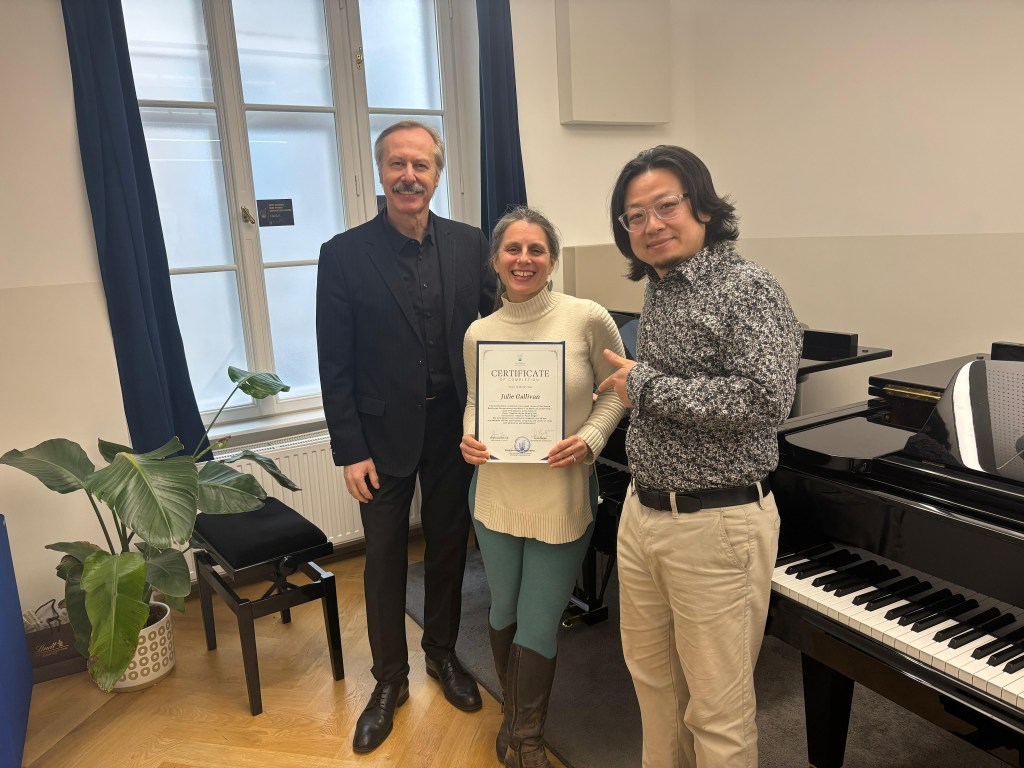
Yes, I wholeheartedly believe that music is indeed the universal language, and one that bridges those boundaries that we humans have created over thousands of years of language and geography and nationality. My piano teacher, Byron, is a Chinese American pianist living in Vienna for 10 years. My composition teacher, Pavel, is a Viennese composer and pianist, born in the Soviet Union to German parents. In both lessons, we spoke only German. That’s a whole other level of bliss – getting to work ON my musical and my composition and piano skills IN German. Now, don’t even get me started on how much I have loved studying the universal music of language IN a language that I am just learning.
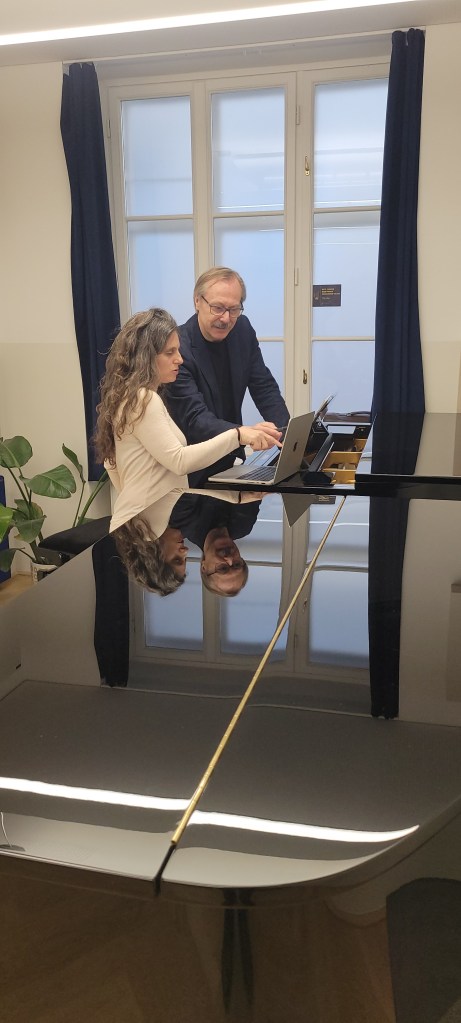
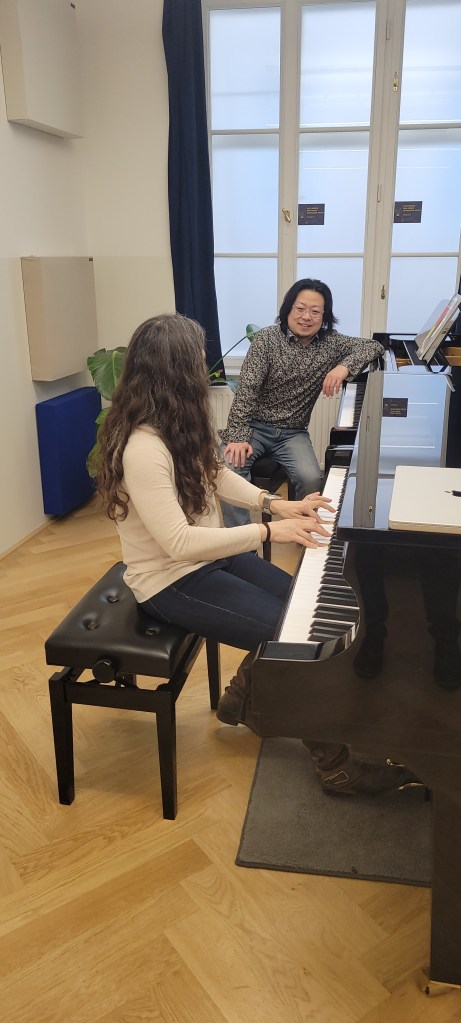
My composition teacher speaks Russian and German, (both of which I can navigate) but no English. But he speaks the language of music expertly. When I played a song for him that is one of the most emotional songs in the show I wrote, he didn’t understand the words, but the look on his face and what he said to me after told me he understood everything that the song was saying. How is that possible between two people from different worlds that have only just met? I don’t think it is possible for me to achieve a higher degree of happiness than the moment I witnessed the magic of this universal language in its purest capacity to travel across invisible distances in an instant.
And, as far as fluency goes, I am no musical virtuoso on any kind of instrument. But my teacher is. To watch him not only bring the music I wrote to life, but to do it with the skill and the beauty of someone that knows how to make music soar – well, I will keep studying languages as best I can, but I am quite confident, no amount of study will help me ever put words to that.
Maybe someday, I’ll find a way to express it. And, there is probably only one language capable to do the task.
Thank you to the music of Vienna for giving me the ultimate experience of musical bliss and for the opportunity to feel the magic of studying the universal language.
 On the Road with Julie
Leave a comment